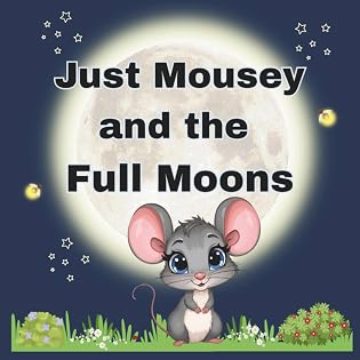
Just Mousey and the Full Moons
by J.M.
Mousey looks up at every full moon of the year and learns its name, from the Wolf Moon in January to the Cold Moon in December. It's a simple, gentle way to teach little ones the full moons without it feeling like a lesson.
Story pages and coloring pages are together in one book, so kids can read about each moon and then color it. Perfect for bedtime, homeschool and moon lovers of every age.
Picture book with coloring pages.
Buy on AmazonYou'll check out safely on Amazon.
Shopping for the holidays? See the Holiday Gift Guide.
The full moon names, month by month
Each full moon has a name that comes from what's happening in nature that time of year. Here's where each one comes from.
- JanuaryWolf Moon
Wolves were said to howl on cold midwinter nights.
- FebruarySnow Moon
This is usually the month with the most snow.
- MarchWorm Moon
The ground softens and earthworms come back up, and so do the robins.
- AprilPink Moon
Named for a little pink wildflower that blooms early in spring. The moon isn't really pink!
- MayFlower Moon
Flowers are blooming everywhere.
- JuneStrawberry Moon
It's time to pick ripe strawberries.
- JulyBuck Moon
Male deer, called bucks, are growing their new antlers.
- AugustSturgeon Moon
Sturgeon, a big fish, were easiest to catch in the Great Lakes this time of year.
- September, usuallyHarvest Moon
The full moon closest to the first day of fall, when crops like corn and squash are ready to gather. Every few years it doesn't show up until early October, and then September's full moon is called the Corn Moon.
- October, usuallyHunter's Moon
The full moon right after the Harvest Moon, when the fields are picked and animals are getting ready for winter. In years when the Harvest Moon comes in October, the Hunter's Moon slides into early November.
- NovemberBeaver Moon
Beavers are busy building their homes before the water freezes.
- DecemberCold Moon
Winter cold sets in and the nights are the longest of the year.
Every few years, a month has two full moons. The second one is called a Blue Moon, which is where "once in a blue moon" comes from. The last one was May 31, 2026.
Sources: Space.com and The Old Farmer's Almanac.
When is the next full moon?
Here are the upcoming full moons, so you and your little one know when to look up. Dates are for the United States.
2026
- November 24Beaver Moon
- December 23Cold Moon
2027
- January 22Wolf Moon
- February 20Snow Moon
- March 22Worm Moon
- April 20Pink Moon
- May 20Flower Moon
- June 18Strawberry Moon
- July 18Buck Moon
- August 17Sturgeon Moon
- September 15Harvest Moon
- October 15Hunter's Moon
- November 13Beaver Moon
- December 13Cold Moon
The moon looks full for a night or two around each date, so don't worry if the clouds get in the way.
Make it a full moon night
- Check the date. Find this month's moon on the calendar above.
- Read the page. Read about that moon with Mousey before bed.
- Color it. Color that month's page in the book.
- Look up. Step outside together and say hello to the moon by name.
Do it every month, and by the end of the year your little one will know all twelve moons by name.
Things to do under the moonlight
A full moon is bright enough to make a regular night feel a little magical. Grab a jacket and try a few of these with your little one.
- Take a moon walk
Go for a slow stroll around the yard or down the road and see how far the moonlight lets you see.
- Find your moon shadow
A full moon is bright enough to make shadows. Have fun making shapes with your hands and arms.
- Have a moonlight picnic
Spread a blanket, bring a little snack and some cocoa, and lie back and look up.
- Look for the face in the moon
Some people see a face and some see a rabbit. Which one does your little one see?
- Peek at the craters
If you have binoculars, take a closer look. You can see the moon's spots and craters.
- Listen to the night
Sit very still and listen for owls, crickets, frogs and other night sounds.
- Howl at the Wolf Moon
In January, step outside and give the Wolf Moon your best howl. Silly is encouraged.
- Draw what you see
Draw or color the moon each month and watch your little collection grow all year.
- Make a moon wish
Close your eyes, make a wish on the full moon and keep it a secret.
Stay close together outside after dark, and bring a flashlight for the walk back.
Full moon rituals
For a lot of us, the full moon is a time to slow down, clear out what we don't need and set our hopes for what's ahead. These simple rituals are easy to share with your little ones too.
- Charge your crystals
Set your crystals on a windowsill or outside where the moonlight can reach them overnight, and bring them in the next morning. Little ones love picking out their favorite stone to charge.
- Make moon water
Fill a clean glass jar with water, cover it and set it out under the full moon. Use it to water your plants, add it to a bath or keep it for your rituals. If you plan to drink it, start with clean drinking water and keep the jar covered.
- Release what you don't need
Write down what you're ready to let go of, like worries, bad habits or a rough month. Then tear it up, or safely burn it with a grown up, and let it go.
- Manifest what you want
Write down your wishes and intentions for the month ahead. Kids can draw theirs. Keep the paper somewhere special and look back on it at the next full moon.
Always use fire carefully and keep candles and matches where little hands can't reach them.
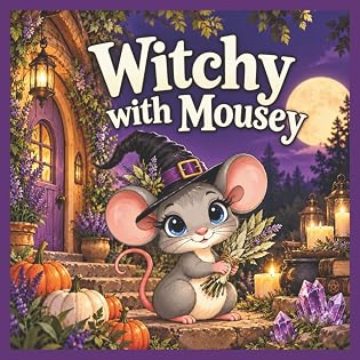
Witchy with Mousey
If your little one can't get enough of the moon, this coloring book is full of moons, stars, tarot cards and a cozy celestial feel. Perfect for the kiddos of a spiritual, witchy momma.
Questions people ask
Is it a coloring book or a picture book?
Both! Story pages and coloring pages are together in one book, so kids can read about each moon and then color it.
Which full moons are in the book?
All twelve, one for each month, from the Wolf Moon in January to the Cold Moon in December.
Where do the full moon names come from?
The names we use today were made popular by The Old Farmer's Almanac and come from Native American, early Colonial American and European traditions. Most are tied to what's happening in nature that month.
Where can I buy it?
On Amazon, in paperback.